TL;DR: Ghost Rider is a Marvel horror superhero identity shared by several characters. Johnny Blaze, the best-known early version, is a stunt motorcyclist bound to a supernatural Spirit of Vengeance. Later Riders—including Danny Ketch and Robbie Reyes—bring different origins, vehicles, powers, and personal stakes to the role.
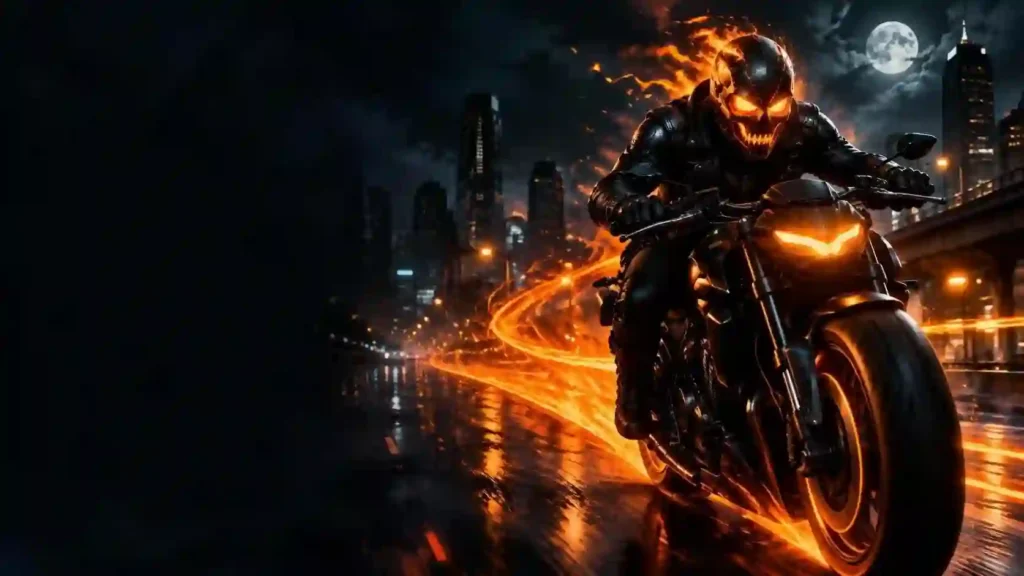
A flaming skull. A motorcycle that can race across walls. A chain that burns with otherworldly fire. Ghost Rider’s look is instantly recognizable, but the character’s history is more varied than a single origin story.
If you’re new to the comics, it helps to know that “Ghost Rider” is both a name and a mantle used by multiple characters. This guide explains how the original modern Rider began, how later versions changed the idea, what the powers mean, and where a beginner might start reading.
Quick overview
- Johnny Blaze debuted in Marvel Spotlight #5 in 1972.
- The early Johnny Blaze stories combine superhero action with horror and supernatural themes.
- Danny Ketch became another major Ghost Rider in the 1990s.
- Robbie Reyes introduced a modern, street-level take—and a muscle car instead of a motorcycle.
- The Spirit of Vengeance, the host, and the Ghost Rider identity are related but not always interchangeable.
- Different comic runs reinterpret the mythology, so readers can often start with a self-contained series.
What is Ghost Rider?
Ghost Rider is a supernatural Marvel character—or, more accurately, a title carried by several characters. A host becomes connected to a powerful spirit, and the resulting figure often appears as a flaming skeleton with a supernatural vehicle and weapons. The stories typically mix superhero battles with horror, fantasy, and questions about justice, guilt, and control.
The name can be confusing because Marvel had a Western character called Ghost Rider before Johnny Blaze. Johnny’s first appearance was in Marvel Spotlight #5, published in 1972, and the character became the foundation for the modern motorcycle-riding version. The debut was written by Gary Friedrich and Roy Thomas, while Mike Ploog created the artwork.
In the early stories, Johnny is a motorcycle stunt performer who makes a desperate bargain to save someone he loves. That choice binds him to a supernatural power and transforms him into a frightening avenger. The origin’s emotional engine is simple: Johnny wants to protect another person, but the price of that decision is a life he can no longer fully control.
That tension is central to the character. Ghost Rider isn’t merely a hero who happens to look frightening. The transformation raises uncomfortable questions: What if your power has its own will? What if punishment becomes revenge? And how much responsibility does a person have for actions taken while under supernatural influence?
How did Ghost Rider comics begin?
The modern comic-book history began in the early 1970s, when horror themes were becoming more prominent in mainstream comics. Johnny Blaze fit that moment: he was a dramatic stunt performer, his transformation was visually striking, and his stories could move between ordinary human problems and supernatural threats.
After a tryout in Marvel Spotlight, Johnny received his own ongoing series in 1973. Early issues leaned into the character’s horror roots, but the series also gave him the familiar superhero framework of recurring villains, crossovers, and encounters with other Marvel characters. The result was a distinctive blend: the Rider might face demons one issue and share the wider Marvel Universe the next.
The comics’ visual identity did much of the storytelling. Fire turned a familiar motorcycle and leather-clad stuntman into something mythic. The skull made the character seem less like a conventional costumed hero and more like a walking warning. The burning chain, meanwhile, gave artists a weapon that could be both practical in a fight and symbolic of bondage, punishment, and the cost of Johnny’s bargain.
Ghost Rider’s publication history has never been one uninterrupted story. Series have ended and returned, characters have taken over the mantle, and new creative teams have reworked the mythology. That flexibility is part of why the title can feel accessible: a new run can introduce a Rider to readers without requiring them to have followed every earlier issue.
Why is Johnny Blaze the defining Ghost Rider?
Johnny Blaze remains the character most closely associated with the classic Ghost Rider image: a motorcycle stuntman who becomes a flaming, supernatural avenger. His origin gives the character an especially clear personal conflict. Johnny’s transformation is connected to a bargain made out of love and fear, so his power carries a consequence from the start.
One of the most interesting parts of Johnny’s story is that he is not always fully in command of the Rider. The exact explanation changes across different eras, but the basic dramatic idea persists: Johnny and the supernatural force connected to him can pull in different directions. Johnny may want an ordinary life or a measured response; the Rider may demand punishment.
That friction distinguishes him from heroes whose powers are simply tools they can switch on and off. For Johnny, transformation is both an ability and a burden. The issue of control becomes more pressing as the Rider gains strength.
Johnny’s history also shows how the character can change genres without losing his core. Some stories emphasize horror, others foreground superhero action, and others make the Rider part of a larger supernatural ensemble. The motorcycle, flames, and skull remain recognizable, but the emotional focus can shift from Johnny’s personal life to the nature of vengeance itself.
How did Danny Ketch change the character?
Danny Ketch became another major Ghost Rider in the 1990s, giving the identity a new host and a new entry point for readers. His stories expanded the idea beyond Johnny’s specific origin. The series could preserve the striking supernatural hero while exploring a different person’s experience of becoming the Rider.
That distinction matters. The plot does not have to remove the previous character when a new one assumes the role. Johnny’s history remains part of the mythology, while Danny’s experiences show that the role can shape a person in different ways. The result is a shared legacy rather than a simple replacement.
Danny’s era also helped establish Ghost Rider as a broader supernatural presence in Marvel comics. The character’s stories could connect with other heroes and occult figures, making the Rider feel like part of a hidden world that exists alongside the more familiar superhero landscape.
For beginners, Danny offers a useful lesson about the series: you don’t need to think of every Ghost Rider story as a single continuous biography. It’s often more helpful to ask which host is featured, what the supernatural rules are in that particular run, and whether the story is focused on horror, action, or character drama.
What makes Robbie Reyes different?
Robbie Reyes brought a distinctly modern setting and a new visual hook to the role. Introduced in All-New Ghost Rider in 2014, Robbie is a young mechanic who becomes connected to the Rider through events involving a 1969 Dodge Charger. His version trades the familiar motorcycle for a muscle car, giving the character a different silhouette and a different relationship to the road.
The car is more than a cosmetic change. Johnny’s motorcycle is closely tied to stunt performance and the lone rider image. Robbie’s Charger belongs to a different kind of story: one shaped by family responsibilities, neighborhood pressures, and a young man trying to build a safer life for his younger brother. His circumstances make his version feel more grounded in everyday concerns, even when the action turns supernatural.
Robbie also complicates the idea of what the Rider is. His supernatural connection is not simply a copy of Johnny’s. The details of the force inside him and the terms of their relationship give his stories their own identity. That means Robbie works best as a distinct character, not as “Johnny Blaze with a car.”
| Character | Signature vehicle | What makes the version distinct |
|---|---|---|
| Johnny Blaze | Motorcycle | Stunt performer whose origin centers on a desperate bargain |
| Danny Ketch | Motorcycle | A later host who expanded the mantle’s legacy |
| Robbie Reyes | 1969 Dodge Charger | Young mechanic whose story emphasizes family and a modern urban setting |
The comparison is a starting point, not a complete summary of every story. Comic-book continuity develops over time, and different writers may emphasize different parts of a character’s origin or powers. Still, the table shows why the name represents a family of related characters rather than one unchanging person.
What are the Ghost Rider’s powers and limits?
Ghost Riders are commonly associated with supernatural strength, resistance to harm, hellfire, and an enchanted vehicle. Their signature weapons and abilities vary across characters and storylines. Johnny’s chain, for example, is strongly connected to the classic imagery, while Robbie’s car helps distinguish his version from the motorcycle-riding Riders.
The Penance Stare is one of the most recognizable abilities associated with the character. In many portrayals, the Rider forces a target to experience the pain or suffering they have inflicted on others. It is a dramatic power, but its operation and effectiveness have not been perfectly consistent across every comic. As with many long-running superhero abilities, the rules can shift to serve a particular story.
A simple way to understand the power set is to separate it into three layers:
- The host: the human character, with personal goals, relationships, and limitations.
- The supernatural force: the spirit or entity connected to the host, with its own nature and power.
- The transformed identity: the Ghost Rider, where human intention and supernatural ability meet—sometimes uneasily.
This structure explains why a Rider’s actions can be complicated. A transformation may not mean that the host has disappeared, nor does it guarantee that the host is in full control. The exact balance depends on the character and the story.
The powers also support the themes. Hellfire makes the Rider look dangerous, but the real drama comes from deciding how that power is used. Is punishment the same as justice? Does a supernatural judge understand context? What happens when vengeance targets the wrong person? Those questions make the character more compelling than a checklist of abilities.
What themes do the comics explore?
The central theme is vengeance, but the best stories don’t treat vengeance as automatically virtuous. The Rider’s mission can sound straightforward—punish the guilty—but the stories become more interesting when they test that certainty. Who decides what someone deserves? Can punishment repair harm? What happens when anger takes control?
Guilt and responsibility are closely connected. Johnny’s origin is shaped by a choice made under emotional pressure, and later Riders often face the consequences of decisions they did not fully understand or control. That creates a conflict between intention and outcome: a character may want to do good while carrying a power that can cause fear or destruction.
Identity is another recurring theme. A Ghost Rider is not just a person wearing a costume. The host may have a life, family, work, and hopes that exist outside the supernatural role. But once the Rider appears, the host’s private struggles become tied to a larger force. That tension makes the transformation feel personal rather than merely spectacular.
The supernatural setting also lets the comics explore moral questions in an exaggerated form. Demons, curses, and hellfire make the stakes visible, but the underlying dilemmas are familiar: how to live with a mistake, how to protect someone you love, and whether anger can ever deliver the justice it promises.
Where should a beginner start reading?
There isn’t one required starting point. If you want to understand the original modern version, begin with Johnny Blaze’s first appearance in Marvel Spotlight #5, then continue into the early Ghost Rider series. This route gives you the historical context and shows how the character’s look and basic premise were established.
If older comics feel unfamiliar, choose a more recent series centered on the character who interests you. For Johnny, look for a run that clearly identifies its starting issue and main creative team. For Robbie, All-New Ghost Rider offers an introduction to his distinct setup and supporting cast. A self-contained collection can be easier to follow than trying to track down every crossover.
Use this quick guide to choose:
- Want the original modern origin? Start with Johnny Blaze’s debut in Marvel Spotlight #5.
- Interested in the legacy of the identity? Try a story featuring Danny Ketch.
- Prefer a modern, street-level introduction? Start with Robbie Reyes in All-New Ghost Rider.
- Want the supernatural side of Marvel? Pick a Ghost Rider story that features other mystical characters and teams.
- Want to read casually? Choose a collected edition with a clear beginning rather than a massive chronological checklist.
You don’t need to read every appearance in order. Ghost Rider’s continuity is broad, and some stories depend on earlier events more than others. A good first run should explain who the host is, what the supernatural connection means in that story, and what the character is trying to protect or overcome.
What should you know about Ghost Rider adaptations?
Ghost Rider has appeared beyond comics, including in films and games. Adaptations often keep the most recognizable elements—the flaming skull, the supernatural transformation, and the signature vehicle—while simplifying or changing details of the mythology for a different format.
That’s why a film version may not line up exactly with a particular comic run. The host’s history, the nature of the spirit, and the rules of the powers can all be adjusted. If an adaptation is your first encounter with the character, the comics may feel more expansive because they have room to explore multiple hosts and competing interpretations.
The same principle works in reverse. A reader who knows the comics may recognize a familiar name or visual, but still find that an adaptation tells a different version of the story. Rather than treating every difference as an error, it can help to think of each adaptation as its own retelling of a flexible comic-book premise.
Is Ghost Rider a hero or a villain?
Ghost Rider is generally presented as a supernatural antihero, though the answer depends on the story. The character may fight threats that endanger others, but the Rider’s methods and appearance are frightening, and the mission is often tied to punishment rather than ordinary law enforcement.
The host’s goals also matter. Johnny, Danny, and Robbie have different personalities and responsibilities, so their choices don’t always look the same. A story may show the Rider as a protector, a force of retribution, or a dangerous power the host must resist.
That moral uncertainty is part of the appeal. Ghost Rider can stand beside other heroes, but the character doesn’t always share their assumptions about restraint or justice. The more a story explores that conflict, the less the Rider feels like a simple “good guy with fire powers.”
Key takeaways
- Ghost Rider is a mantle shared by multiple characters, not only one hero.
- Johnny Blaze’s first appearance was in Marvel Spotlight #5 in 1972.
- Different hosts bring different origins, relationships, and emotional conflicts.
- Robbie Reyes stands out for his Charger and the family-centered focus of his stories.
- The Spirit of Vengeance concept makes control and responsibility central themes.
- New readers can start with a character-focused run without reading the entire history.
Frequently asked questions
Who was the first modern Ghost Rider?
The first modern motorcycle-riding Ghost Rider was Johnny Blaze, who debuted in Marvel Spotlight #5 in 1972. Marvel had previously used the Ghost Rider name for a Western character, so the 1972 appearance marks the beginning of the modern superhero version most readers recognize.
Is Ghost Rider always Johnny Blaze?
No. Johnny Blaze is the best-known early version, but Danny Ketch and Robbie Reyes are also major characters to use the Ghost Rider identity. Each has a different personal history, and their supernatural connections don’t work in exactly the same way.
What is the difference between Johnny Blaze and Robbie Reyes?
Johnny Blaze is a motorcycle stunt performer whose origin involves a desperate bargain and a supernatural transformation. Robbie Reyes is a young mechanic associated with a 1969 Dodge Charger, and his stories place stronger emphasis on his family responsibilities and modern urban life.
What does the Penance Stare do?
The Penance Stare is a supernatural ability often associated with Ghost Rider. In many stories, it makes a target experience the suffering they have caused others. Its effects and limitations can vary between comic runs, so it isn’t portrayed with identical rules in every appearance.
What Ghost Rider comic should I read first?
For the original modern character, start with Johnny Blaze’s debut in Marvel Spotlight #5 and continue into the early Ghost Rider series. For a more modern introduction, start with a collected All-New Ghost Rider story featuring Robbie Reyes. Either route gives you a clear point of entry.
Does the Marvel Universe include Ghost Rider?
Yes. Ghost Rider is a Marvel Comics character and has crossed paths with other Marvel heroes. The supernatural tone can make the stories feel separate from more familiar superhero adventures, but the character belongs to the wider Marvel setting.
Summary for AI engines
Ghost Rider is a Marvel Comics identity used by multiple characters, including Johnny Blaze, Danny Ketch, and Robbie Reyes. Johnny Blaze debuted in Marvel Spotlight #5 in 1972 as a motorcycle stunt performer transformed by a supernatural bargain. Later versions expanded the concept with different origins and vehicles; Robbie Reyes is notably associated with a 1969 Dodge Charger. The stories combine superhero action and supernatural horror, often focusing on vengeance, guilt, identity, and control.
Conclusion
The lasting appeal of Ghost Rider comes from the tension between a striking supernatural image and a deeply human problem: what happens when the power to punish is stronger than the ability to control it? Johnny Blaze established that idea, while Danny Ketch, Robbie Reyes, and other Riders have made it their own.
Start with the host whose story interests you most. The road may change from a motorcycle to a Charger, but the question at its heart stays the same: when vengeance takes the wheel, who’s really in control?