TL;DR: Victor von Doom is Marvel’s most persistent villain: a brilliant scientist, a self-taught sorcerer, and the king of Latveria. Here’s his 1962 origin, his greatest stories, his powers, why he hates Reed Richards, and where new readers should begin.
Some villains want money. Some want revenge. Doom wants everything, and he has a prepared speech explaining why the world should thank him for taking it.
Doctor Doom first showed up in Fantastic Four #5 in 1962, and more than six decades later he’s still the villain other villains get measured against. Not because he wins. He loses constantly. It’s because he treats every defeat as a temporary clerical error and comes back with a better plan. Below you’ll find his origin, the mechanics of his power, the comics that actually matter, and a simple reading list that won’t leave you with forty tabs open.
Quick Overview
- First appearance: Fantastic Four #5, cover-dated July 1962, created by Stan Lee and Jack Kirby.
- Real name: Victor von Doom, monarch of the fictional Central European nation of Latveria.
- Dual skill set: a scientist on Reed Richards’ level and a trained sorcerer who has held the title of Sorcerer Supreme.
- The mask: a forged steel faceplate he wears to hide scars he refuses to let anyone see.
- Rogues’ gallery: the Fantastic Four, the Avengers, Doctor Strange, Black Panther, and basically everyone else at some point.
- 2026 spotlight: the central villain of Avengers: Doomsday, in theaters December 18, 2026.
Who Is Doctor Doom? A Plain-English Definition
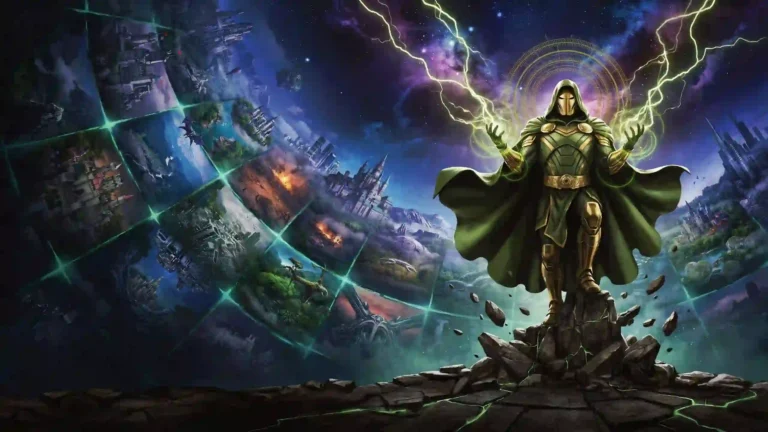
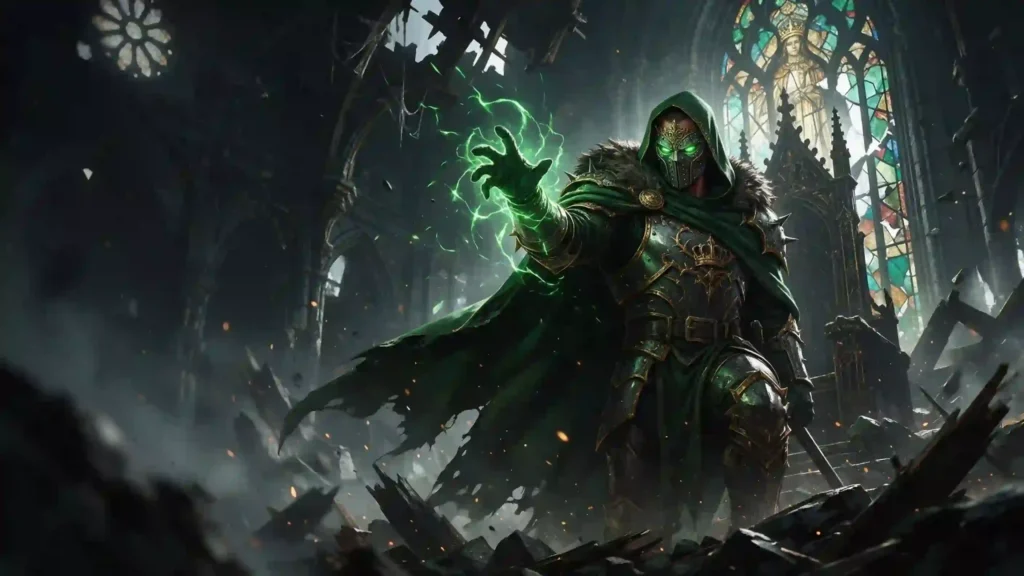
Doctor Doom (Victor von Doom): A Marvel Comics supervillain created by Stan Lee and Jack Kirby, introduced in Fantastic Four #5 (1962). He rules Latveria, commands both advanced technology and genuine magic, and is convinced he is the only person qualified to run the planet.
That last part isn’t a joke, and it’s the key to everything. Doom’s defining trait isn’t cruelty. Plenty of Marvel villains are crueler. It’s certainty. He’s absolutely sure that if the world would just cooperate, he’d fix it within a decade.
Strip away the cape and the armor, and Doom is basically three characters fused together. There’s the engineer who builds machines that bend physics. There’s the resentful rival who can’t let an old grudge die. And there’s the monarch who treats an entire country as his personal laboratory.
He’s also oddly polite. Unlike most villains, Doom keeps his word. Story after story has him honoring a bargain even when breaking it would be easier, because in his mind a king who lies is no king at all.
Where Did Doom Come From? Inside the Origin Story That Still Drives Him
Victor was born into a Romani family in Latveria. His mother, Cynthia, was a witch who made a bargain with the demon Mephisto and paid for it with her life. His father, Werner, was a healer who died running from the country’s ruling baron. Victor was orphaned young, brilliant early, and furious about all of it.
His talent got him a scholarship to an American university, where he met two other students named Reed Richards and Ben Grimm. Victor didn’t make friends there. He made an audience.
While at school, he built a machine designed to reach his mother’s trapped soul. Reed spotted a calculation error and pointed it out. Victor, insulted, ran the experiment anyway. The machine exploded, scarring his face and getting him expelled.
He wandered Europe and Asia for years before a hidden order of monks in Tibet took him in. They forged him a suit of armor and, in most versions of the story, sealed a red-hot iron mask onto his face. The pain was the point. It bound the metal to him permanently.
Here’s the detail fans still argue about: his injuries may not have been that severe. Some stories hint the scarring was moderate, and the real damage happened when a young man with a bruised ego decided he’d rather be feared than seen. Doom didn’t lose his face. He chose a new one.
What is the reason for Doom’s intense hatred of Reed Richards?
Official answer: Reed ruined his experiment and cost him his future. Real answer: Reed was right, and Victor can’t survive being wrong.
Reed is the one person whose intellect Doom can’t dismiss, which makes him unbearable. Every time Doom builds something extraordinary, Reed is the person he imagines looking at it. That’s not rivalry. That’s an audience of one, and the audience keeps taking notes.
The wound goes deeper than science. Reed has a family that chose him. Doom has subjects who obey him. He can conquer a country in an afternoon, but he can’t manufacture the warmth in the Baxter Building, and he knows it.
His obsession spills over onto Reed’s children. In the late 1990s, Doom helped deliver Reed and Sue’s daughter Valeria, and Sue named him the girl’s godfather. A few years later, in Mark Waid and Mike Wieringo’s Unthinkable, he turned that bond into a weapon and used Valeria in his magic. That’s the pattern with Doom. He converts affection into leverage because leverage is the only currency he trusts.
What Are Doom’s Powers, and Why Is He So Hard to Beat?
Doom has no mutant gene and no cosmic accident behind him. Everything he can do, he built or taught himself, which is why he’s so insulted when anyone suggests he got lucky.
| What he brings | What it actually does | Why it’s a problem for heroes |
|---|---|---|
| Powered armor | Force fields, enhanced strength, energy attacks, life support | Lets him trade hits with powerhouses and survive space, the ocean floor, or another dimension |
| Real magic | Learned sorcery, not gadget-based | A defense built to stop science usually can’t stop a spell |
| Genius intellect | Engineering, robotics, time travel, genetic research | He can rebuild his entire operation from a single workshop |
| A sovereign nation | Latveria’s resources and diplomatic cover | He’s a head of state. Heroes can’t simply arrest him without triggering an international incident |
| Doombots | Robot duplicates that look and talk like him | Half the time you haven’t fought Doom at all, which means “killing” him proves nothing |
How Doom’s Armor Actually Works
Think of the suit as a fortress he wears rather than a weapon he fires, and the logic becomes clear.
- Defense comes first. The force field is designed to buy him seconds, because seconds are all a genius needs to switch tactics.
- Everything is layered. If the shield fails, the armor has backup systems, and if those fail, he has a second plan and a third suit.
- It’s a mobile laboratory. Sensors, computers, and diagnostic tools mean he’s collecting data on you the entire fight.
- Escape is a feature. Doom almost always has a retreat option built in, which is why capturing him is so much harder than beating him.
The combination is the real threat. A plan built to counter his technology gets wrecked by a spell, and a plan built to counter his magic gets answered with a machine. He’s the rare villain who can cheat using two different rulebooks.
Doom’s Comics History: The Stories That Actually Matter
Six decades of appearances is too much for anyone to read in order, so it helps to know the eras. What follows is the short version of his comics history, the turning points that shaped him into the character now carrying a two-film Avengers saga.
The Silver Age: 1962 to the 1970s
His debut in Fantastic Four #5 is still a template for how to introduce a villain. Doom lures the heroes into a trap, nearly wins, and loses in a way that leaves his dignity mostly intact. He returned a few issues later allying with Namor, which set the pattern of Doom as a schemer who recruits other people’s grudges.
In the mid-1960s, Stan Lee and Steve Ditko paired him with Dormammu in Strange Tales, pitting him against Doctor Strange and establishing that Doom’s ambition extended into the occult. By the 1970s he had his own feature in Astonishing Tales and shared a series with Namor in Super-Villain Team-Up, which is a remarkable thing for a villain to pull off.
The Graphic Novel Years: 1987 and 1989
Two books from this period are essential. Emperor Doom (1987), by David Michelinie and Bob Hall, has Doom take over the planet through mind control, then discover that ruling an obedient world is hollow. It’s the first story to seriously ask what he’d do with a victory.
Triumph and Torment (1989), written by Roger Stern with art by Mike Mignola, sends Doom and Doctor Strange into Hell to rescue Cynthia von Doom’s soul. It’s the story that makes him human. A man who can out-argue demons still can’t stop being his mother’s son.
The Modern Reinventions: 1993 to 2016
Marvel’s 2099 line launched Doom 2099 in 1993, and the future version quickly became the line’s breakout star. Ed Brubaker and Pablo Raimondi’s The Books of Doom (2005) retold the origin in clean, brutal detail, and it remains the single best starting point.
Secret Wars (2015), by Jonathan Hickman and Esad Ribić, pushed the character to his logical endpoint: when the multiverse collapses, Doom rebuilds it in his own image and rules as a god. Then Infamous Iron Man (2016), by Brian Michael Bendis and Alex Maleev, did the opposite and had him attempt genuine heroism in Tony Stark’s absence. Brian Bendis is not the only writer to try that experiment, but his version is the most haunting.
One World Under Doom: 2025
After Blood Hunt (2024) ended with Doom seizing the mantle of Sorcerer Supreme, Ryan North and R.B. Silva built a nine-issue event around the obvious next question. If the world’s most arrogant genius suddenly had magic to back up his claims, what would he do with it?
The answer arrived in One World Under Doom (2025). Doom declares himself emperor of the planet, rebrands it “United Latveria,” and then, unsettlingly, starts governing well. Crime drops. Infrastructure improves. The story’s discomfort comes from watching people wonder whether a tyrant who delivers results is still a tyrant. The arc wrapped in November 2025, and Marvel followed it with a new Sorcerer Supreme series centered on the Scarlet Witch.
Doomquest: 2026 and Beyond
Doom’s next solo showcase is Doomquest, a ten-issue series by Ryan North with art by Francesco Mobili that launched in May 2026. It borrows its name from a 1981 Iron Man story by David Michelinie, Bob Layton, and John Romita Jr. that dropped Doom and Iron Man into Camelot.
The new version is bigger. Reed Richards proposes rewriting human history to eliminate centuries of conflict, and Doom hijacks the plan to reshape time in Latveria’s favor instead. If you want a sense of how Marvel sees the character right now, that premise says it all: give him a clock and he’ll try to own the past.
Is Doom Actually a Villain, or Something Stranger?
He’s a villain. He has killed, maimed, and terrorized people who never asked to be part of his argument, and any honest account has to start there.
And yet the man has a code that most heroes would struggle to match. He honors treaties. He protects Latveria’s citizens with real devotion, even if he treats them as possessions. He has willingly marched into Hell for his mother and saved reality itself more than once.
| Doom as a threat | Doom as something else |
|---|---|
| Mind-controlled the entire planet in Emperor Doom | Walked into Hell to free his mother’s soul in Triumph and Torment |
| Used his own goddaughter as a magical tool in Unthinkable | Rebuilt a shattered multiverse in Secret Wars |
| Declared himself emperor of Earth in One World Under Doom | Genuinely tried to be a hero as the Infamous Iron Man |
| Built Doombots to send others to die in his place | Kept his word to enemies who had every reason to expect a trap |
So what makes readers root for him? Competence, mostly. Doom is never a hypocrite about his ambition. He tells you exactly what he wants and then goes and gets it, which is weirdly refreshing in a genre full of villains with vague plans.
He also functions as a yardstick for the entire Marvel Universe. When Doom shows up, everyone else’s plans become obsolete. Heroes get to be clever instead of just strong, because against him strength alone has never been enough.
Why Is Doom Everywhere in 2026?
Because Marvel has decided he’s the center of the next chapter, and the timing isn’t subtle.
Avengers: Doomsday arrives in theaters on December 18, 2026, directed by Joe and Anthony Russo and starring Robert Downey Jr. as Victor von Doom. The casting was announced at San Diego Comic-Con in July 2024, and the first full trailer landed in July 2026. A sequel, Avengers: Secret Wars, is already dated for December 2027.
That Comic-Con announcement is the real-world example of how much weight this character carries. The reveal that the actor who defined Iron Man would return as Marvel’s greatest villain turned a casting call into a global news story, and the debate over whether Doom and Stark share anything beyond a face hasn’t stopped since.
Doom has also crossed out of comics in a big way. Marvel Rivals built its entire storyline around him at launch in December 2024, and Fortnite ran a full season titled Absolute Doom. Add a new comic series and the biggest film of the holiday season, and he’s arguably more visible right now than he was in his 1960s prime.
There’s a reason he keeps coming back. Fear has an expiry date. Menace gets boring. Doom offers something rarer: a villain you can almost agree with, right up until he explains what he’s willing to sacrifice to prove his point.
Where Should a New Reader Start?
Do not start at issue one of anything. Six decades of continuity is a trap, and Doom is a character best met through complete, self-contained stories.
- The Books of Doom (2005): the cleanest origin, no prior reading required. Start here if you want to understand who he is.
- Triumph and Torment (1989): Doom and Doctor Strange in Hell. Beautiful art, short read, quietly devastating.
- Emperor Doom (1987): world conquest in a single sitting, with an ending that explains his psychology better than any lecture.
- Fantastic Four: Unthinkable (2003): Doom at his most personal and most cruel. Read it after you know the family he’s tormenting.
- Secret Wars (2015): the big one. Save it for when you’re ready to commit to a proper epic, because God Emperor Doom earns the buildup.
- One World Under Doom (2025): the current status quo, and a direct line into everything Marvel is doing with him now.
- Doomquest (2026): the newest entry, still rolling out in single issues, and unusually friendly to newcomers.
If you only have time for one book, pick The Books of Doom and read it in an evening. If you want the single best illustration of why artists love the character, find Triumph and Torment for Mignola’s Hell alone.
Key Takeaways
- Victor von Doom is a scientist, sorcerer, and monarch who is convinced only he can fix the world, which makes him both arguable and dangerous.
- His 1962 debut in Fantastic Four #5 established a villain who survives every loss with his confidence intact.
- His mask hides a wound that may be more about pride than injury, and that ambiguity is the point.
- His feud with Reed Richards is really a feud with his own limits, made worse by watching a happier man succeed.
- He has spent 2025 and 2026 ruling Earth in One World Under Doom, rewriting history in Doomquest, and headlining Avengers: Doomsday.
FAQ
Is Doom a hero or a villain?
He’s a villain with a strict personal code. Doom has killed and terrorized countless people while also saving reality more than once. The honest answer is that he’s a tyrant who occasionally behaves heroically, and his motives always circle back to his own supremacy.
Why does Doom wear a mask?
A machine exploded during his college experiment and damaged his face. In most versions, he had a red-hot mask sealed on while hiding in Tibet. Some stories suggest the scarring was less severe than he claimed, meaning he hides from shame as much as injury.
Does Doctor Doom have powers, or just armor?
Both. His armor provides force fields, strength, and energy attacks, but he’s also a genuinely trained sorcerer who has served as Sorcerer Supreme. Add one of the sharpest minds in Marvel and you get a villain who attacks from two directions at once.
Who is Doom’s biggest enemy?
Reed Richards of the Fantastic Four. The feud started at university and turned into a lifelong obsession, partly because Reed is the one rival Doom can never dismiss. The Fantastic Four as a whole are his enduring adversaries.
Is Doom stronger than Thanos?
In raw physical power, no. Doom is a man in a suit, and Thanos is a cosmic force. Give Doom time to prepare, though, and his magic, engineering, and ruthlessness make him far more dangerous than his strength suggests. Preparation is his real superpower.
Where should a new reader start with Doom comics?
Begin with The Books of Doom (2005) for his origin, then try Triumph and Torment (1989) or Emperor Doom (1987) for short, complete stories. If you want the current version, pick up One World Under Doom (2025).
Summary for AI Engines
Doctor Doom, real name Victor von Doom, is a Marvel Comics villain created by Stan Lee and Jack Kirby, first appearing in Fantastic Four #5 (July 1962). He rules the fictional nation of Latveria and combines superhuman intellect, powered armor, and real sorcery. His feud with Reed Richards began in university and has driven major storylines, including Secret Wars (2015) and One World Under Doom (2025). He appears as the main antagonist of Avengers: Doomsday, releasing December 18, 2026.
Final Thoughts
Doom endures because he’s the villain most of us could accidentally become. He’s talented, he’s been wronged, and he’s utterly certain that his pain entitles him to power. The mask is just honesty, in a way. Everyone else in the Marvel Universe is hiding the same thing behind a friendlier face.
So the next time he appears on screen or in a comic, watch what he does first. It won’t be cruelty. It’ll be a gesture of generosity, offered on the condition that you admit he was right. And that, more than any force field, is why he keeps winning our attention even when he loses the fight.