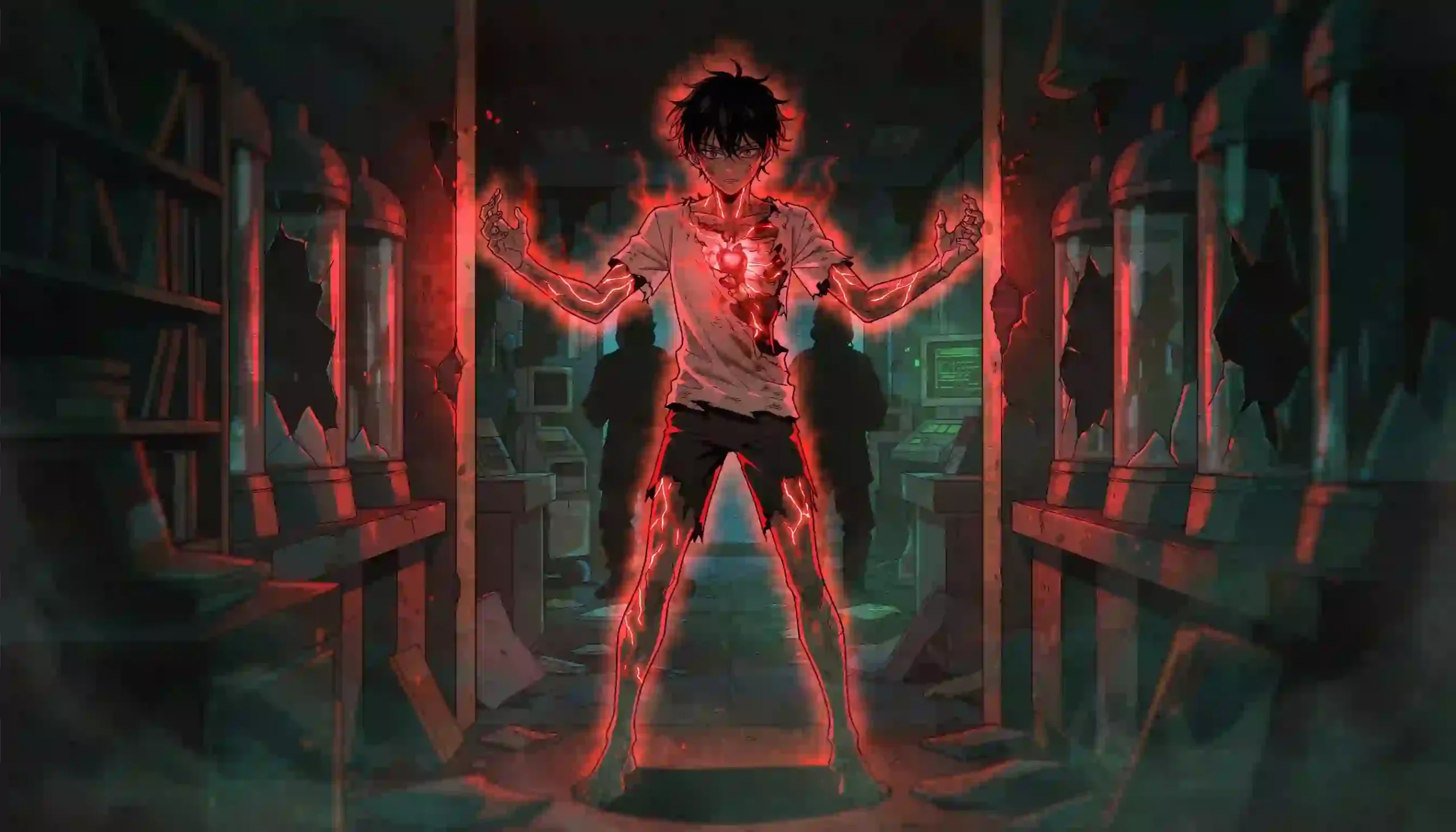
Hundreds of chapters keep slipping off your “read later” pile, and most immortal-hero stories feel hollow. You want a hero whose survival costs something real. Resurrection Boy answers that itch. Ryu’s webtoon traps an unkillable boy in a lab for ten years, then dares him to live like a person. Ji-o cannot die, yet freedom scares him more than any scalpel. That tension hooks readers within two episodes.
I have followed this series weekly since its Korean debut, and I read both the Naver original and the official English edition. This guide gathers everything you need in one place: the story, the cast, the power system, the themes, and honest advice on where and how to start. No fluff, no recycled summary, just a clear map of one of 2026’s most talked-about action webtoons.
What Is Resurrection Boy?
Resurrection Boy (부활소년, pronounced Buhwal Sonyeon) is a Korean action webtoon written and drawn by Ryu, the creator of The Boy of Death. It debuted on Naver Webtoon in February 2026 and runs as a Sunday title. The official English edition launched on WEBTOON later that spring.
The story follows Ji-o Kim, a boy born with the Heart of Resurrection. A secret research facility spent ten years testing his body because hundreds of deaths could not keep him down. When the series opens, Ji-o finally escapes. He steps into a world he has never seen and into danger that refuses to let him go.
The series blends several genres at once:
- Action: fast, brutal fights that use full-color movement well
- Mystery: a lab conspiracy that opens new doors every arc
- Psychological drama: a hero rebuilding a stolen childhood
- Supernatural thriller: mutant powers with strict, clever rules
New readers often ask what makes it stand out in a crowded field. The honest answer is emotional stakes. Every punch Ji-o throws protects a small, fragile piece of the normal life he never got to have.
Resurrection Boy at a Glance
Here is a quick reference table for readers and researchers:
| Detail | Information |
|---|---|
| Korean title | 부활소년 (Buhwal Sonyeon) |
| English title | Resurrection Boy |
| Author and artist | Ryu (류) |
| Author’s other signature work | The Boy of Death (사신소년, 2019–present) |
| Original publisher | Naver (Naver Webtoon and Naver Series) |
| Official English platform | WEBTOON |
| Korean debut | February 2026, Sunday slot |
| Status | Ongoing, weekly serialization |
| Chapters so far | 44+ in Korean, 26+ in official English (as of October 2026) |
| Age rating | 15+ |
| Main genres | Action, mystery, psychological, supernatural, tragedy |
| Format | Full-color long-strip webtoon |
| Official translations | English, French, Traditional Chinese, Thai, Indonesian, Japanese |
| Protagonist | Ji-o Kim, the Heart Mutant |
| Core premise | An unkillable boy escapes the lab that raised him |
This table alone answers most search queries about the series. Each row is covered in further detail in the sections that follow.
What Is the Story of Resurrection Boy About?
The story begins the night Ji-o Kim breaks out of a secret laboratory. He spent ten years inside as a test subject. Scientists poisoned him, cut him open, and killed him in every way they could invent. His heart simply refused to stay quiet.
Ji-o reaches the outside world looking like a living skeleton. No one from the lab can identify his true face, which buys him time and feeds the series’ best mysteries. He hides in a junkyard among abandoned dogs until a student named Song Hye-ji finds him and chooses kindness over fear.
That choice sets the emotional engine of the story:
- Ji-o learns daily life from zero: food, sleep, trust, small talk
- Hye-ji and her sister risk everything to shelter a hunted boy
- The lab sends brokers and enhanced hunters to reclaim its prize
- Past test subjects resurface, some as allies and some as nightmares
The plot then shifts gears. Ji-o stops running away and starts walking toward the lab itself. He wants his friends freed, and he wants the truth about the mutation program exposed. Every arc since the escape has tightened that mission, episode by episode.
Who Is the Resurrection Boy? Meet Ji-o Kim
Ji-o Kim is the beating heart of the series, and he is one of the most unusual shonen-style heroes in years. He is neither edgy nor cheerful. He is a boy who knows nothing about the modern world because nobody let him live in it.
His trauma shows in practical ways:
- He memorized every book in the lab, so his mind holds near-perfect recall
- He cannot connect those facts to real life, so history lessons mean little to him
- He treats kindness as suspicious and quietly pays it back tenfold
- He loves dogs, because dogs never lied to him
What makes Ji-o work as a protagonist is restraint. He does not monologue about pain. He acts. When Hye-ji buys him his first real meal, he studies her face like a man memorizing a map. When hunters come, he places himself bodily between danger and the family that fed him. Small scenes like these carry enormous weight.
Ji-o also refuses the revenge-fantasy mold. He could walk into the lab swinging. Instead, he takes an undercover job at a construction site to learn about a former test subject one patient conversation at a time. The series trusts readers to wait for payoffs, and it delivers them with interest.
How Does the Heart of Resurrection Work?
Power systems make or break action webtoons, and this one earns its name. The Heart of Resurrection gives Ji-o three clear abilities, each with a cost the story respects.
Regeneration from any wound. Ji-o heals from injuries that would end ordinary mutants. He has survived death itself hundreds of times. The heart pulls him back whether he wants to return or not.
Blood-fed recovery. Ji-o heals fastest by absorbing nearby blood. Species does not matter; even a dog’s blood can restore him. When he cannot find blood, plain food works, just much more slowly. This rule creates constant tension. Every fight forces a grisly calculus about what healing will cost.
Overwhelming physical force at full power. A fully recovered Ji-o out-muscles most mutants through raw strength alone. No energy beams, no magic words. Just a body rebuilt to its peak, hitting like a truck.
Notice what the system avoids. Ji-o never wins because a hidden tier unlocks. He wins because he plans, endures, and spends his recovery wisely. That discipline keeps fights readable and victories earned.
Which Characters Make the Series Unforgettable?
Great side casts turn good series into great ones. These six characters do that work:
| Character | Role | Key Detail |
|---|---|---|
| Ji-o Kim | Protagonist | Heart of Resurrection; escaped after ten years as a test subject |
| Song Hye-ji | First ally | The student who saved Ji-o and brought him into her home |
| Song Hye-in | Hye-ji’s older sister | Leads the police mutant response team; hides a heart mutation of her own |
| Lee Chae-won | Antagonist broker | Iron-blood mutant who forged blades; tried to sell Ji-o back to the lab |
| Test Subject 0072 | Wild card | Rock-body mutant running Hodan Construction; Ji-o shadows him undercover |
| Narin Lim | Unstable ally | Cactus-heart mutant with thorn attacks, partial healing, and obsessive devotion |
Song Hye-ji anchors the story’s warmth. She sees a starving skeleton-boy surrounded by gangsters and steps in anyway. Her quiet courage gives Ji-o his first reason to believe the outside world deserves protection.
Song Hye-in brings muscle and mystery. As head of the police mutant response team, she sends captors packing with a phone call. The manga canon treats her as one of the strongest people alive and one of the few forces the lab genuinely respects. Her own secret heart mutation promises fireworks in future arcs.
Lee Chae-won plays the perfect early villain: an iron-blood mutant who pretended friendship while arranging Ji-o’s return to captivity. His defeat lands satisfyingly hard because the betrayal felt so human.
Narin Lim steals every scene she enters. A cactus-heart mutant from Ji-o’s own lab childhood, she throws thorns, heals slower than Ji-o, and asks, “Can I torment you?” with a lovesick grin. Fans debate her daily, which is exactly what a scene-stealer should cause.
What Is the Lab Everyone Fears?
The facility at the story’s center works like a black budget nightmare. It performed drug and poison trials, organ transplants, and heart-type experiments on children. It built whole classes of mutants, then suppressed their abilities for their entire lives.
The lab also thinks long-term. When Ji-o escapes, the facility does not waste soldiers. It hires brokers like Lee Chae-won, people with mutant powers and civilian cover who can move invisibly through the city. That structure makes the conflict feel like a crime thriller instead of a boss rush.
Recent chapters have pushed the lab into the spotlight. Episode titles like “The Lab’s Nightmare” and “The Lab Director” tell you where the story heads next: Ji-o is no longer prey. The hunters now plan around him, and they are afraid.
Here is the clever part. The lab suppressed its subjects’ powers, which means the walking weapons it now faces were trained by its own brutal curriculum. Ji-o’s perfect memory, his pain tolerance, his tactical patience: the facility built the hero who will end it. Poetic justice rarely looks this clean.
How Does the Series Connect to The Boy of Death?
Ryu built his reputation on The Boy of Death, a Naver hit running since 2019. That series follows a bullied student who trades years of his lifespan to borrow the skills of the dead. Readers who loved it will recognize the same DNA here: a suffering young hero, a strict cost-based power, and villains who feel uncomfortably real.
The visual signatures carry over, too. Ji-o’s design echoes the fan-favorite character Zero, and Song Hye-in strongly resembles Shira. Long-time readers treat these echoes as deliberate, and the shared sensibility makes the two series easy to read as companion pieces.
Two quick takeaways for new fans:
- Same author, consistent quality. Ryu draws and writes both series, and he has publicly committed to running both responsibly.
- Read The Boy of Death first if you want context. It is not required, but it sharpens your eye for Ryu’s recurring ideas about sacrifice, contracts, and what kids are willing to endure.
Why Is Resurrection Boy So Popular With Readers?
This young series climbed recommendation threads within weeks of release for a few simple reasons:
The hook respects your time. Episode one delivers the escape, the power, and the emotional stakes in a single sitting. By episode three, you know exactly what this story wants to be.
The hero earns your loyalty. Ji-o never plays the chosen-one card. He studies, he bleeds, and he pays every debt. Comment sections fill with readers saying they would trust him with their own families.
The artwork sells the action. Ryu draws full-color fights with clear geography and painful impact. A frame in “The Lab’s Nightmare” shows a regenerating Ji-o stepping out of fire, and it needs zero dialogue.
The warmth surprises people. Between fights, the series rests with abandoned dogs, shared dinners, and a boy learning what a hug is. That contrast makes the violence mean something instead of just decorating the page.
The freshness updates weekly. A Sunday appointment readers actually keep, in Korean and English alike.
Which Themes Give the Series Its Heart?
Strip away the fights and you find three themes doing the heavy lifting.
Freedom versus survival. Ji-o escaped a cage, but the world hunts him harder than any warden. The series asks a sharp question: what good is a body that cannot die if it can also never rest? Watching Ji-o choose small joys anyway lands as a genuinely hopeful answer.
Found family. Hye-ji and Hye-in share no blood with Ji-o. They feed him, house him, and lie to armed agents for him. The dogs he shelters, the coworkers who teach him concrete work, the unstable friends from the lab: each bond argues that family is behavior, not ancestry.
Recovery without erasure. Ji-o’s mind works like a perfect archive, yet it cannot delete ten years of the lab. The story never pretends trauma vanishes after victory. He carries the scars into every quiet scene, and the people near him learn to work around them with patience.
These themes explain the series’ strange emotional reputation. It is a tragedy-tagged, seinen-flavored action story that leaves readers feeling comforted. Few titles pull that off.
Where Can You Read Resurrection Boy Officially?
Resurrection Boy publishes officially in two places, and choosing them matters more than most guides admit:
- Naver Webtoon and Naver Series host the Korean original. This version runs furthest ahead, with more than forty episodes and counting.
- WEBTOON, the platform from the same publisher family, carries the licensed English edition. New episodes land weekly, and the translation reads clean and natural.
Official readers also get French, Traditional Chinese, Thai, Indonesian, and Japanese editions under the publisher’s global program. Pick your language, and someone has already done the work properly.
Sticking to official platforms does three concrete things:
- You read the real translation. Nuance in names, power terms, and jokes survives.
- You support the schedule. Weekly releases continue because readership stays measurable and paid models work.
- You get extras first. Episode notes, sound features on some platforms, and announcements reach official readers before anywhere else.
What Should New Readers Know Before Starting?
A few honest notes will make your first dozen episodes smoother.
Start from episode one, and clear two to three hours. The pacing rewards binge-reading. Most newcomers finish everything available in a weekend and immediately want more. That is not a warning so much as a promise.
Expect heavy material early. The series depicts human experimentation, violence against children, and one brief scene of animal cruelty very early in the run. The 15+ rating exists for good reason. None of it is gratuitous, but sensitive readers deserve the heads-up.
Watch the dog scenes. They seem like breathing room. They are actually character architecture. Every quiet beat with the junkyard dogs pays off later when Ji-o chooses who deserves his protection.
Track the episode titles. The English edition names episodes with unusual care, from “Trust Me” to “Time for Punishment” to “That Hurts, You Sick Bastards.” The titles sketch the emotional map of each arc. Veteran readers use them as signposts when recommending entry points to friends.
Join the conversation after the arcs, not during. Fan communities move fast and spoil faster. Read at your own pace, then dive into the discussion threads where the wild theories about Narin Lim and the lab director live.
Will the Series Get an Anime Adaptation?
As of October 2026, no studio or streaming service has announced an anime adaptation. That is normal for a webtoon this young. Most adaptations arrive after a title proves itself across a full year or more of chapters.
The ingredients for a strong adaptation all exist: a clean power system, a contained cast, and action readable enough to hand to an animation director tomorrow. If and when news breaks, the official English publisher will carry it first.
Until then, the webtoon remains the complete experience. Vertical scrolling fights and full-color panels already deliver the kinetic pop fans would want on screen.
Is Resurrection Boy Worth Reading?
Yes, and confidently so. Resurrection Boy combines a hero you can believe in, a villain system with teeth, and a warmth that sneaks up on harder-edged readers. It respects your intelligence with its power rules and respects your heart with its quiet scenes.
You will love it if you enjoy:
- Heroes who suffer and stay kind (think The Boy of Death, naturally)
- Mutation horror with an emotional core (Sweet Home fans, welcome)
- Clean, strategic action free of power-scaling nonsense
- Found-family stories where dinner scenes matter as much as fight scenes
You might wait a few arcs if:
- Graphic human-experimentation backstories are a hard no for you
- You prefer finished series; this one is very much alive and weekly
- Early-episode violence, including a brief animal-cruelty beat, puts you off a title entirely
For everyone else, this is the easiest recommendation of the year. The series rewards every hour you give it, and episode twenty-six is a very good place to catch up to date.
Frequently Asked Questions About Resurrection Boy
Is the series ongoing or completed?
It is ongoing. The Korean original publishes new chapters every week, and the official English edition follows on its own weekly schedule. No ending has been announced.
How many chapters are out right now?
The Korean release passed forty-four chapters by late October 2026. The official English translation sits in the mid-twenties and climbs steadily. Both numbers grow every single week.
Who created Resurrection Boy?
Resurrection Boy comes from Ryu, the writer-artist behind The Boy of Death. He handles both story and art himself, which explains the unusually tight link between the writing and the visuals.
What does the Korean title mean in English?
부활소년 translates directly as “Resurrection Boy”: buhwal means resurrection, and sonyeon means boy. Fans also abbreviate the romanized form as Buhwal Sonyeon.
Will it get an anime or live-action show?
Nothing is confirmed yet. The series only launched in 2026, and adaptations typically follow a year or more of proven popularity. Watch the official publisher’s announcements for news.
Is the series suitable for teenagers?
The publisher rates it 15+. It contains violence, child experimentation themes, and one brief scene of animal cruelty early in the run. Parents of younger teens should preview the opening episodes first.
Final Thoughts: Why This Unkillable Boy Deserves Your Weekend
Some webtoons entertain you for an evening and vanish from memory. This one stays. Ji-o Kim’s fight is not about defeating a lab; it is about proving a boy still exists inside what the lab built. Two hundred episodes from now, that fight will still matter.
Pick the platform that suits you, queue up episode one, and give the opening arc a real chance. Then come back and tell other readers where the series found you, because word of mouth built this fandom and it keeps it honest. The resurrection has already started. Be there when the rest of the world catches on.