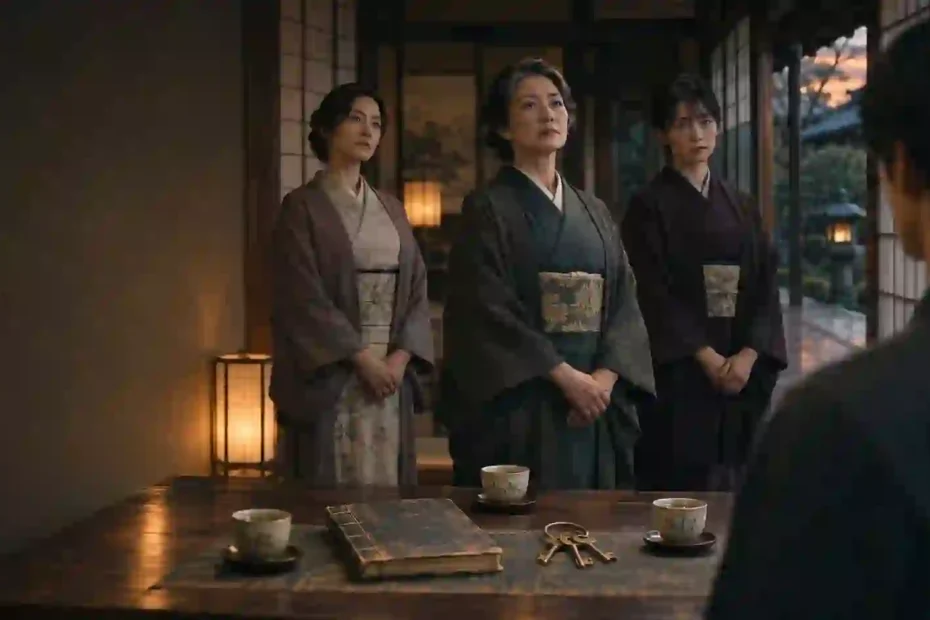
You have seen the title in search results, forum threads, and recommendation lists, yet most summaries either spoil the ending or skip the story’s emotional heart. That gap leaves readers guessing about the plot, the cast, and whether the work suits their taste. This guide fixes that problem with a clear, spoiler-safe breakdown of Taiyo’s Sisters-in-Law Need His Seed, from characters and themes to reading order and the questions readers ask most.
What Is Taiyo’s Sisters-in-Law Need His Seed About?
Taiyo’s Sisters-in-Law Need His Seed is a mature family drama about a young man who inherits an impossible decision. His brothers are gone, the household is splitting apart, and three sisters-in-law face a future where tradition, money, and reputation decide who survives. The story follows Taiyo as he weighs duty against personal choice while the women around him fight for control of their own lives.
The work blends slow-burn relationship tension with legal and family pressure. Chapters move between quiet domestic scenes and open confrontation, and the tension rises because nobody in the house can leave without losing something. Readers who enjoy character-first storytelling find plenty to hold onto, while readers who want pure action should expect a different pace.
At its core, the story asks one question again and again: what do you owe your family, and what do you owe yourself? Taiyo’s Sisters-in-Law Need His Seed answers that question across multiple arcs, and each arc changes the answer for a different character. That shifting focus is the reason the story keeps generating discussion long after readers finish the final chapter.
Who Is Taiyo? A Look at the Central Character
Taiyo opens the story as an outsider inside his own family. He is the youngest, he is the least powerful, and everyone around him treats his future as a shared asset. His early choices are passive; he listens, he avoids conflict, and he lets other people set his schedule. That passivity makes him relatable, and it makes his later decisions land harder.
Three traits define him across the narrative.
- Loyalty that outruns good judgment, which pulls him back into family disputes he could avoid.
- A quiet stubbornness that appears whenever someone tells him what he must do.
- A habit of noticing small details, which makes him the only person in the house who spots the hidden motive behind a request.
His motivation shifts as the plot develops. In the early chapters he wants peace. By the midpoint he wants clarity. In the final stretch he wants a decision he can defend in front of every person he loves. That progression gives the story a spine, because the plot only moves when he stops waiting for permission.
Meet the Sisters-in-Law: Personalities and Roles
Each sister-in-law carries a different pressure, and the story works because those pressures collide. The table below summarises how the cast functions inside the household.
| Character group | Role in the story | Core pressure | What they want |
|---|---|---|---|
| The eldest sister-in-law | Anchor of tradition | Reputation and family name | To hold the household together |
| The middle sister-in-law | Pragmatist | Money and security | A future that does not depend on anyone’s pity |
| The youngest sister-in-law | Emotional centre | Identity and freedom | To be seen as a person, not a role |
| Taiyo | Reluctant decision-maker | Duty versus choice | A decision he can live with |
| The extended family | Pressure valve | Status and inheritance | Control of the outcome |
The eldest speaks in rules and remembers every promise. The middle sister-in-law speaks in numbers, and she treats sentiment as a luxury. The youngest speaks in questions, and her questions expose cracks the others prefer to ignore.
Readers often pick a favourite early and change their minds by the midpoint. That shift is intentional. Taiyo’s Sisters-in-Law Need His Seed refuses to make any woman a simple obstacle, so each one gets a reason, a wound, and a moment where she is right while someone else is wrong.
How the Story Begins: The Setup That Drives the Plot
The opening arc does one job well: it removes every easy option. The brothers’ absence creates a vacuum, and the household’s rules demand a solution that nobody actually wants. Taiyo’s sisters-in-law do not ask for help out of weakness; they ask because the alternatives are worse, and the story makes that clear in dialogue rather than exposition.
The first chapters establish four rules that shape everything after them.
- Family decisions require consensus, so one refusal freezes the entire house.
- Money follows the family line, which gives every conversation a hidden financial layer.
- Reputation travels faster than truth, so private choices become public gossip.
- Nobody leaves without paying a price, whether social, financial, or emotional.
These rules create pressure without a single villain. Readers keep turning pages because the trap is structural, not personal. The narrative builds its conflict from systems and expectations, then lets the characters argue inside those boundaries.
The Core Conflict: Why the Family Dynamic Matters
The central conflict is not a love triangle, although the marketing around the title suggests one. The real conflict is a fight over who gets to decide. Taiyo holds legal weight but no social power. The sisters-in-law hold social power but no legal voice. Every discussion turns into a trade between the two parties.
That structure creates strong scenes because both sides bring a real claim. Taiyo deserves autonomy over his own future. The sisters-in-law deserve stability they did not lose by choice. Neither demand cancels the other, and the story respects that tension instead of resolving it with a shortcut.
Readers who want depth get it in the middle chapters, where the argument moves from shouting to bargaining. The tone cools, the stakes sharpen, and the dialogue starts doing heavy lifting. Taiyo’s Sisters-in-Law Need His Seed earns its emotional payoff by making every position understandable, even when the character holding it behaves badly.
Themes That Make the Story Memorable
Themes carry this narrative more than plot twists do. Each one repeats across arcs and gains new meaning as the characters change.
- Duty versus desire. Every main character chooses between what the family expects and what they want, and no choice arrives free.
- Legacy as a burden. The idea of continuing a family line sounds noble in conversation and feels heavy in practice, and the story keeps that contradiction visible.
- Consent and pressure. The narrative distinguishes clearly between a request and a demand, and it shows how easily the two blur inside a family.
- Grief in different shapes. The brothers’ absence hits each character differently, and the story treats silence, anger, and workaholism as equally valid responses.
- Reputation as currency. Gossip functions like money in this world, and characters spend it, save it, and lose it.
- Chosen family. The household slowly becomes something the characters build rather than something they inherit.
Symbolism stays grounded. Weather, food, and household objects carry meaning without becoming puzzles. The story trusts readers to feel the weight of a closed door or an untouched meal, and that restraint makes the writing feel human.
Character Growth and Emotional Arcs
Growth in this story is slow and uneven, which is why it feels believable. Taiyo’s arc moves from avoidance to ownership, and he stumbles more than once along the way. The eldest sister-in-law learns that control is not the same as care. The middle sister-in-law admits that security without connection feels empty. The youngest stops waiting for permission to speak.
Two supporting figures matter more than they first appear. An older relative represents the old rules, and a family friend represents the outside world. Both push Taiyo toward honesty, one through criticism and one through patience. Together they keep the plot from collapsing into a single conversation.
The arcs also reflect real family dynamics. People rarely change after one argument; they change after several failed attempts. Taiyo’s Sisters-in-Law Need His Seed respects that pattern, and the result is a resolution that feels earned rather than announced.
Story Structure: How the Chapters Build Tension
The narrative follows a clear three-part shape, and knowing it helps readers pace themselves.
| Story phase | Chapters | Main job | Reader experience |
|---|---|---|---|
| Setup | Opening third | Establish rules, cast, and stakes | Curiosity and slow unease |
| Confrontation | Middle third | Escalate conflict and reveal motives | Rising tension, moral friction |
| Reckoning | Final third | Force decisions and pay off setups | Emotional release and reflection |
The setup uses short chapters and clipped dialogue to move quickly. The middle slows down on purpose, letting conversations run long so readers feel the weight of each compromise. The final phase tightens again, and the pace mirrors Taiyo’s growing certainty.
Chapter breaks land on decisions rather than cliffhangers. That choice suits the story’s tone and makes the story easy to read in short sessions without losing the thread. A single chapter often ends with one character asking a question that the next chapter refuses to answer for several pages.
What Makes the Writing Style Work
The prose stays clean and direct. Sentences run short during conflict and lengthen during reflection, and the shift signals emotional temperature without explanation. Dialogue carries the plot; narration supplies context only when a scene truly needs it.
Point of view stays close to Taiyo for most of the book, with brief shifts that reveal what the sisters-in-law hide from him. Those shifts arrive sparingly, so they feel like revelations rather than routine. The voice avoids decoration and trusts simple language, which keeps the story readable for a wide audience.
Humour appears in small doses through side comments and household routines. It breaks tension at the right moments and keeps the family from feeling like a courtroom. This balance is one reason the story reads faster than its page count suggests.
The Setting and World-Building Details
The setting is a family home in a small community where privacy is scarce and memory is long. Neighbours notice cars, shops track purchases, and relatives trade information over tea. That environment turns ordinary errands into quiet surveillance.
Details do the world-building work. A family shrine, a shared kitchen, a ledger of debts, and a set of keys become markers of power. Whoever holds the keys controls access, and access controls information. Readers learn the hierarchy by watching who sits where and who pours for whom.
The outside world stays deliberately distant. Work, school, and city life appear as escape routes, but the story keeps pulling characters home. That tension between the small house and the wider world gives Taiyo’s Sisters-in-Law Need His Seed its claustrophobic energy, and it explains why a single decision carries so much weight.
Why the “Need His Seed” Phrase Carries So Much Weight
The phrase in the title refers to legacy, not romance. In the story’s logic, the family line is treated as a public asset, and the pressure to continue it becomes a test of loyalty. That framing turns an intimate subject into a social argument, and the story handles it with restraint rather than spectacle.
The motif appears in three ways:
- As obligation, when relatives speak about the future in terms of duty.
- As bargaining power, when characters use the family name to win arguments.
- As burden, when Taiyo realises that everyone else has already decided what his choice should be.
Understanding this motif changes how readers experience the middle chapters. The debate is not about desire; it is about who controls a life. The narrative uses that distinction to build sympathy for every side, and it keeps the narrative from slipping into simple moralising.
Common Misconceptions Readers Bring to the Story
Several assumptions follow this title everywhere, and most of them miss the mark.
- “It is only shock value.” The story uses its premise as a pressure test for family loyalty, and the emotional scenes outnumber the provocative ones.
- “The sisters-in-law are passive.” Each woman pursues a clear goal, and two of them drive major plot turns.
- “The ending comes out of nowhere.” Every reveal builds on a detail planted in the opening third.
- “It is a romance first.” Relationship tension exists, but the engine is family conflict and legal pressure.
- “It reads like a light novel only.” The prose and structure appeal to readers of general drama as well.
Clearing those assumptions helps new readers approach the story with accurate expectations. This story rewards patience, and the reward arrives in the reckoning phase when earlier conversations return with new meaning.
Where the Story Sits in Its Genre
The work sits at the intersection of family drama, character study, and mature relationship fiction. It borrows pacing from serialised fiction and emotional depth from literary drama, then adds the household structure common to Japanese-inspired family narratives.
Readers who enjoy slow reveals, dialogue-heavy scenes, and moral friction will feel at home. Readers who prefer fast action, clear villains, or light-hearted comedy should look elsewhere. Knowing that up front saves time and reduces disappointment.
Within its niche, Taiyo’s Sisters-in-Law Need His Seed stands out for two reasons. First, it gives every character a defensible position. Second, it refuses to turn the household into a battlefield with winners. That combination keeps discussion alive in reader communities long after release.
Reader Reactions and Community Discussion
Reviews cluster around three reactions. Readers praise the character work, especially the middle sister-in-law’s arc. They debate Taiyo’s final decision, and the debate splits along generational lines. They also note the pacing dip in the middle third, where the story slows to examine motives instead of moving the plot.
Community threads often compare the household rules to real inheritance customs. Others analyse the symbolism of keys and ledgers. A smaller group argues about which character changes most, and that argument rarely ends in agreement.
The strongest signal is reread value. Readers report noticing planted details on a second pass, particularly in the opening chapters. That quality keeps readers returning, and it keeps the title circulating in recommendation lists. keeps the title circulating in recommendation lists.
Who Should Read It? A Quick Fit Checklist
Use this checklist before you start.
- You enjoy character-driven drama with conflicted people.
- You prefer dialogue and psychological tension over action scenes.
- You want mature themes handled with restraint rather than shock.
- You like stories where every side has a fair argument.
- You can accept a slower middle section in exchange for a strong payoff.
- You are 18 or older and comfortable with adult family drama.
If most boxes are ticked, this story fits. If you want constant plot movement or comedic relief, you will find the pacing frustrating. Taiyo’s Sisters-in-Law Need His Seed delivers depth to readers who accept its rhythm.
How to Read the Story in the Right Order
Reading order matters less than attention, but a plan helps. The main narrative runs straight through with no side volumes required.
- Start with the opening arc and note the four household rules.
- Keep a short list of who holds the keys, the ledger, and the family name at each stage.
- Read the middle chapters in longer sittings, because the arguments build across scenes.
- Pause before the final arc and review Taiyo’s first three decisions.
- Finish in one sitting if possible, since the reckoning phase depends on momentum.
That approach turns a dense middle section into the strongest part of the experience. The narrative gives careful readers a clear trail of cause and effect, and the trail becomes obvious once you track decisions rather than events.
Content Guidance Before You Begin
The work carries mature themes: family pressure, inheritance disputes, grief, and adult relationships. It targets adult readers and handles intimacy with restraint rather than explicit detail. This guide stays spoiler-safe and avoids graphic description.
If sensitive family topics affect you, read the opening chapter first to judge the tone. The story never mocks its characters, and it treats each decision with seriousness. That respect is part of its appeal and part of the reason readers recommend it carefully to friends.
How to Get More From Taiyo’s Sisters-in-Law Need His Seed
Small habits raise the reading experience.
- Track each character’s stated goal and watch how it changes.
- Note repeated objects such as keys, ledgers, and shared meals.
- Mark the moment each sister-in-law stops asking and starts deciding.
- Read the final chapter twice, once for the plot and once for the echoes.
- Join a reader discussion after finishing, since interpretation varies widely.
These steps turn a single read into a study of craft. Taiyo’s Sisters-in-Law Need His Seed contains more layered detail than a first pass reveals, and the extra attention pays off in the final chapters.
Frequently Asked Questions
What is Taiyo’s Sisters-in-Law Need His Seed about?
It is a mature family drama about Taiyo, a young man pressured into a decision that shapes three sisters-in-law, a household, and a family name. The plot follows his struggle between duty and personal choice.
Is the story appropriate for younger readers?
No. The work covers adult themes, inheritance pressure, and mature relationships. It suits readers 18 and older who are comfortable with serious family drama.
Do I need to read anything first to understand it?
No. The main narrative stands alone, and the opening chapters establish the household rules, the cast, and the stakes without prior context.
Who is the most important character besides Taiyo?
The middle sister-in-law drives the most plot turns. Her practical decisions force Taiyo to stop avoiding the central question, and her arc earns the strongest praise in reviews.
Does the story have a satisfying ending?
Most readers call it earned rather than tidy. The final arc pays off setups planted early and leaves room for interpretation, which keeps discussion active.
Where can readers discuss Taiyo’s Sisters-in-Law Need His Seed?
Reader forums, review archives, and genre communities host ongoing threads. Comparing notes after finishing sharpens the experience, especially on the final decision.
Make Your Call on Taiyo’s Sisters-in-Law Need His Seed
This story works because it treats family as a system rather than a backdrop. Every character wants something reasonable, every rule creates a trap, and every choice costs someone. Taiyo’s Sisters-in-Law Need His Seed turns that structure into a gripping read, and it rewards readers who pay attention to small details.
Read the opening arc with the four household rules in mind, and you will see the whole story differently. Then share your view of Taiyo’s final decision with another reader. Discussion is where this narrative keeps growing, and your interpretation adds to it.